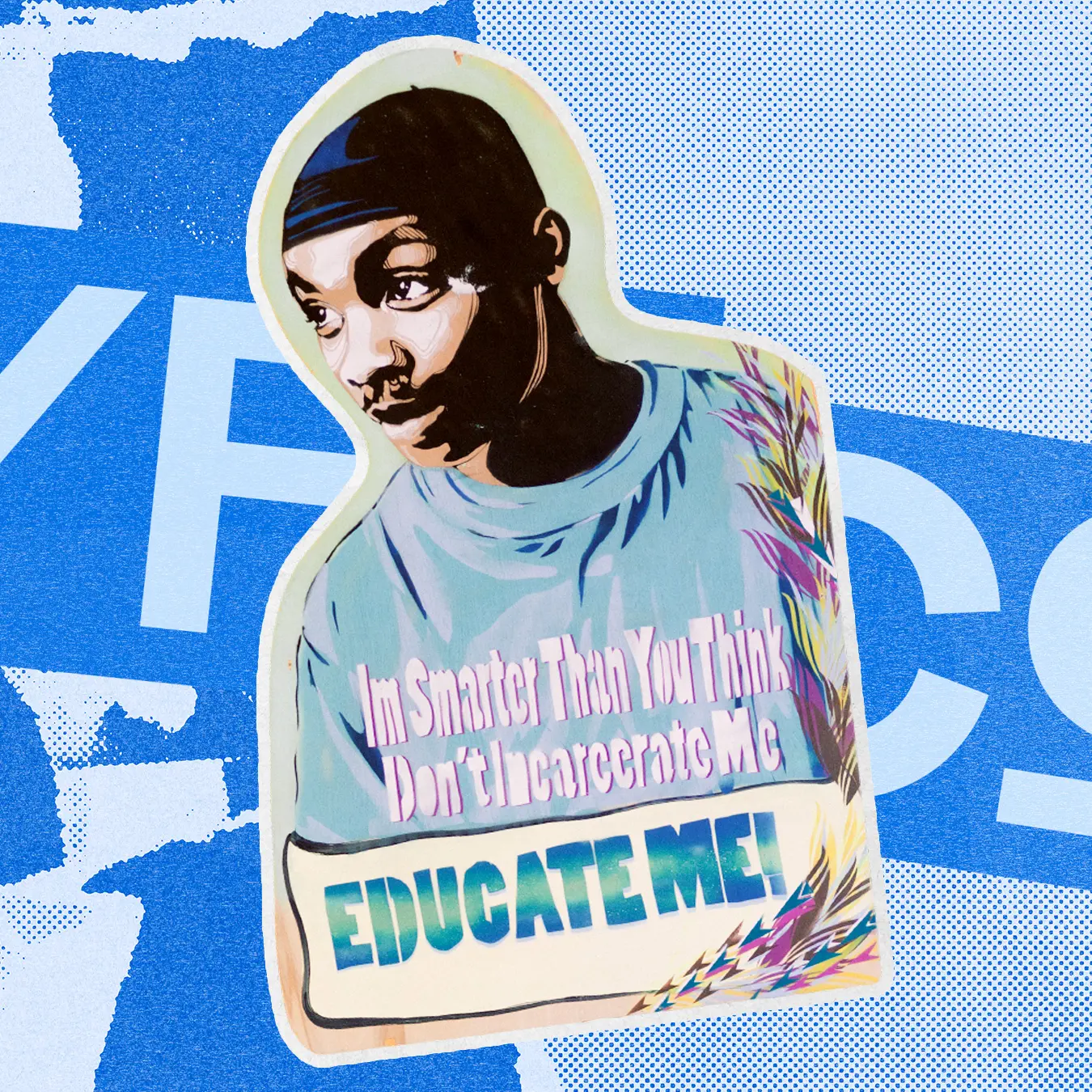





State of Youth Prisons
We are facing a pivotal moment for juvenile justice – while youth incarceration is in decline overall, our movement needs sustained momentum in the fight for community-based alternatives to incarceration that prioritize safety, accountability, and long-term support.
We have made significant gains in keeping children out of prison over the last three decades. Youth confinement rates are down 77 percent, which points to the success of community-led initiatives over the long term.
But we still have a long way to go to ensure safety, healing, and opportunity for children who do get caught up in the system. Half of the young people in detention are being held for nonviolent offenses and, once they’ve been arrested, they’re still just as likely to be sent to prison as they were 30 years ago. These harmful policies disproportionately target Black and Brown young people, showing that we still have real work to do to root out racism across all aspects of the juvenile justice system.
The conditions inside these facilities pose very real risks to the safety and wellbeing of the children incarcerated there. Furthermore, we are seeing a wave of harsher detention policies on legislative agendas across the country, potentially signaling a worrisome shift in public support for community-based alternatives.
Now is not the time to lose ground – piecemeal approaches to improve the conditions of confinement or build “better youth prisons” keep us committed to institutions that repeatedly fail young people. Recent examples of safety breakdowns, non-compliance, and neglect show that prisons cannot deliver the care, stability, and accountability that young people need.
- In Colorado, the Pueblo Youth Services Center is facing scrutiny after families reported that their children weren’t getting enough to eat and appeared to be losing significant weight. The concerns prompted a federal investigation into whether these facilities are violating young people’s constitutional rights by providing inadequate nutrition and holding them in unsafe, inhumane conditions.
- U.S. Immigration and Customs Enforcement (ICE) is currently using the Abraxas juvenile detention facility in Berks County, Pennsylvania to hold immigrant children under a federal contract. Abraxas has had a history of abuse allegations and state oversight issues and is no place for any child.
- In Philadelphia, the city’s primary juvenile detention center faced licensing consequences after a series of alarming incidents, including violent unrest, staffing shortages, and failures to follow mandatory reporting rules. Reports pointed to unsafe conditions, inadequate oversight, and systems that were unable to ensure young people’s basic wellbeing.
- A federal class-action lawsuit alleges that the New York State Office of Children and Family Services (OCFS) has been placing youth, some as young as 12, in solitary confinement for days, weeks, or even months at a time. The suit claims children are locked alone in small cells for up to 24 hours a day, and that isolation is sometimes used due to staffing shortages rather than safety concerns. Children are being denied education and programming, and, in some cases, held in rooms without working toilets or sinks, forcing them to use buckets or containers. These practices violate state regulations, constitutional protections, and disability rights laws.
- In states like Kansas, lawmakers are advancing proposals that would roll back earlier juvenile justice reforms and increase the use and length of detention. Advocates warn that these changes risk reversing hard-won progress, pushing more young people — particularly Black and marginalized youth — deeper into correctional systems rather than investing in community-based support, prevention, and care.
Youth Fight Back
Youth prisons are a policy choice, and so is investing in young people. Young organizers are using the power of their voices and lived experience to push back against new detention expansions, improve conditions in their local facilities, and prevent the rollback of hard-won reforms. Across the country, they are exposing the failures of a system that prioritizes cages over care, and demanding community-based alternatives, restorative justice, and long-term support.
- The Varsity Spending Plan, Southern Movement Committee: This campaign aims to achieve a $10 million investment in young people, families, and neighborhoods in Nashville to build safer communities and address gun violence. The plan, developed by Nashville community members and proposed by the Southern Movement Committee, seeks investment into community center programming, restorative justice programming in high schools, and an Office of Youth Safety. In 2025, SMC won a $1.7 million budget allocation in support of the Office of Youth Safety and increased community center programming.
- Ending Endless Probation, CURYJ: In California, Communities United for Restorative Youth Justice successfully worked in a statewide coalition to pass Assembly Bill 1376, which establishes statewide standards for the noncustodial probation system, minimizing the amount of time young people spend on probation. This keeps children from spending their childhoods languishing on probation unnecessarily, and youth justice systems can avoid wasting scarce resources supervising young people who are on the right track.
- Finish the 5 Campaign, Texas: Finish The 5 is a youth-led campaign dedicated to closing Texas’ five state-secure juvenile detention facilities and investing in community-based alternatives to incarceration. Finish The 5 is led by a coalition of youth organizers, activists, advocates, and formerly incarcerated people to raise awareness about the unsafe and inhumane living conditions for kids in the facilities.
Now What?
Our abolitionist future depends on an organized and strategic movement to end youth incarceration. Together, we can build a future where safety is created through investment in communities, education, healing, and opportunity, not cages.
We cannot settle for short-term fixes while young people continue to suffer behind bars. We are committed to long-term, structural reinvestments, including diversion programs, credible messenger mentoring, violence interrupters, and youth employment, that truly reduce harm, strengthen families, and build safe communities.
We’re calling on you to take action in your communities. Speak out, organize, and demand that lawmakers invest in community-based alternatives, close unsafe youth facilities, and end youth incarceration. You can call your senator at (202) 224-3121 to push for solutions that center safety, healing, and opportunity — not cages. Share our manifesto to bring your people along – together, we can transform youth justice to reduce harm, protect communities, and create real safety for all.