

The Commonwealth of Virginia is in the midst of a transformation of its juvenile justice system. The Department of Juvenile Justice (DJJ) has closed the Beaumont Juvenile Correctional Center (JCC), proposed closure of the Bon Air JCC, and presented a Transformation Plan that includes two new youth prisons and a statewide continuum of community-based alternative placements and services. However, a proposal by DJJ and the City of Chesapeake to construct a 112-bed Joint Juvenile Justice Center encountered significant community opposition in late 2017, and DJJ ultimately withdrew the plan. In voicing opposition to the proposed Chesapeake prison, community members expressed the belief that Virginia should invest even more resources in prevention services and alternatives to incarceration, and that Virginia should replace large, outdated prisons with small, home-like settings for the small population of young people who made need secure care. Community members remarked that they lacked meaningful opportunities to weigh in on DJJ’s Transformation plan and felt blindsided by the proposal to build a new, large youth prison.
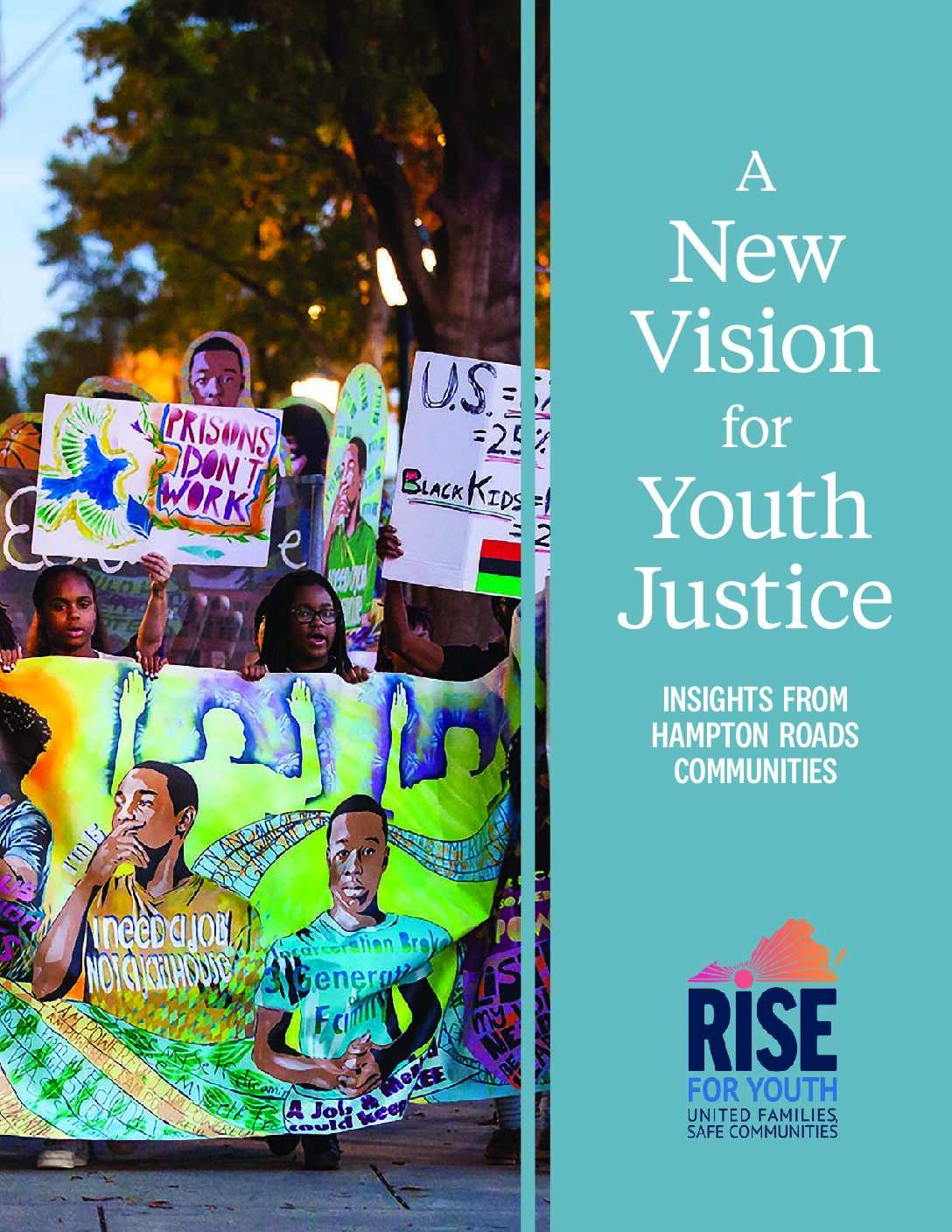
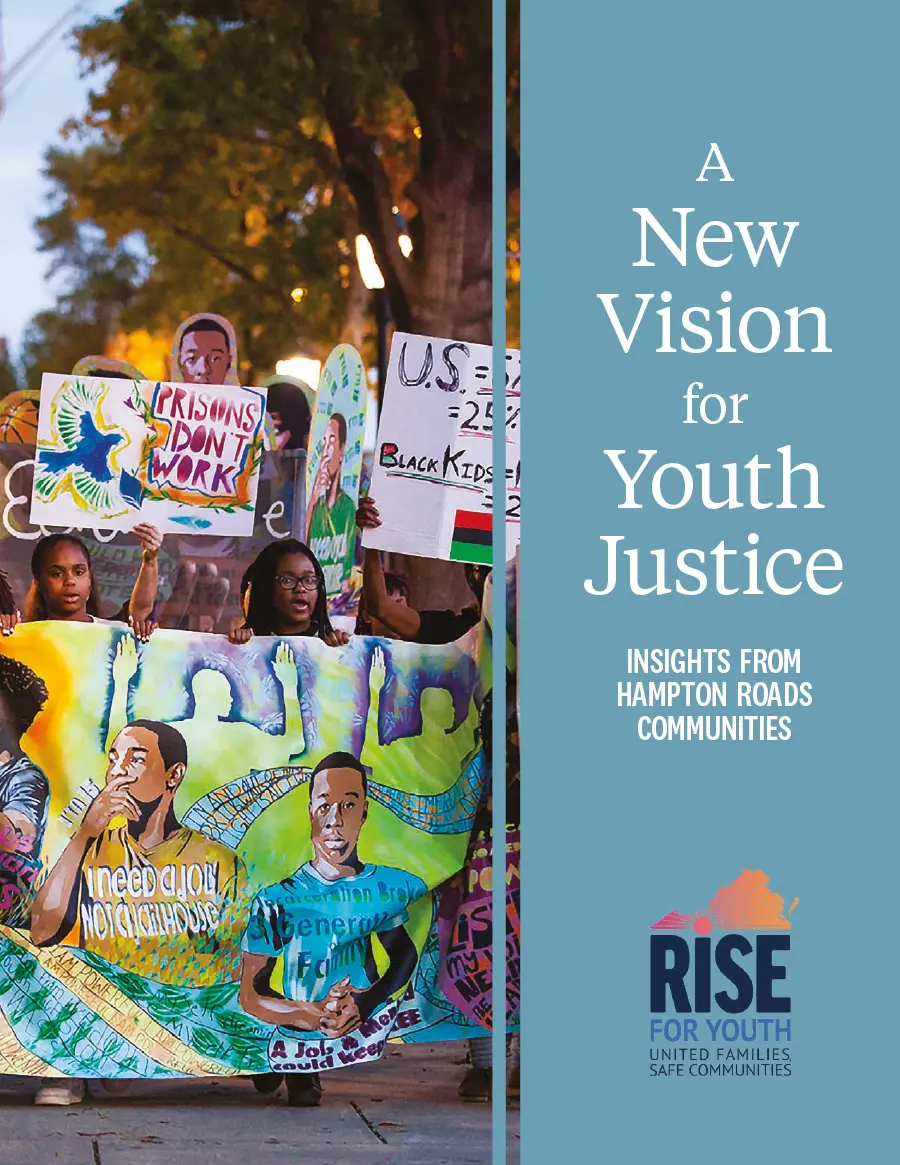
The communities of Hampton Roads have some of the highest rates of youth incarceration in the Commonwealth. The residents of Hampton Roads—particularly those most affected by youth incarceration— must have a voice if Virginia’s juvenile justice system transformation is to be successful. In September and October of 2017, RISE for Youth, a nonpartisan coalition in support of community alternatives to youth incarceration, held a series of community visioning sessions across Hampton Roads to answer this question: What do young people need to avoid justice system involvement and to lead successful lives?