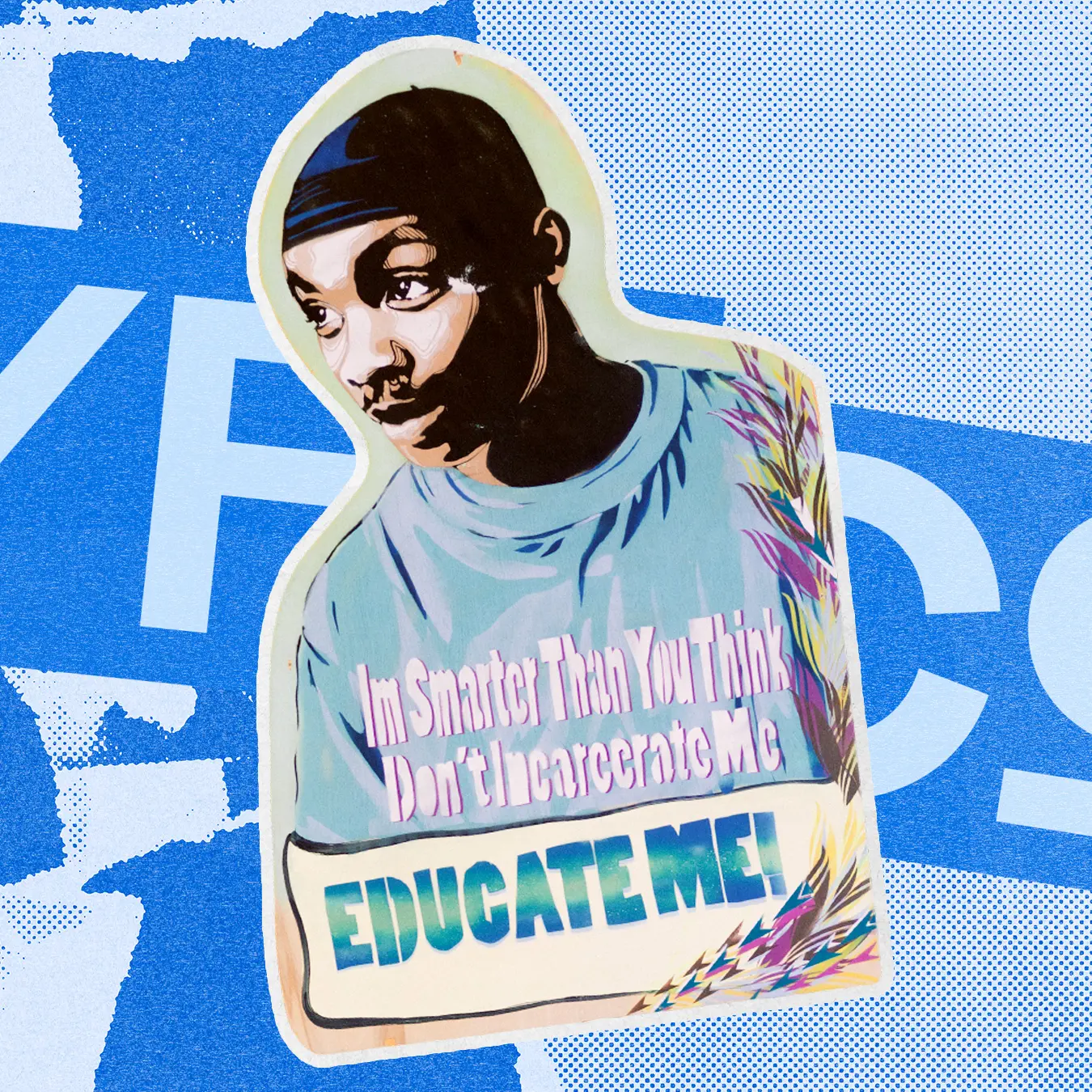




“When we knock all these youth prisons down, I’ll be there to plant strawberries and sunflowers.”
– Espiranza Talamante, Block x Block Fellow from Southwest Organizing Project in Albuquerque, NM
The most important work we do at Youth First Justice Collaborative is training up this generation of youth organizers and abolitionists to lead us on the path to liberation. That work now has an official home: the Youth Hub @ YFJCo, where young people can connect, learn, grow as organizers and shape the youth justice movement for the long term.
We build power when people recognize their shared conditions, develop a collective analysis, and take action together to transform those conditions. When young people are equipped with the tools, resources, and opportunities to lead, they become a powerful force for dismantling systems of punishment and building the futures their communities deserve.
Through the Youth Hub, we’re investing in young people with opportunities programs that develop their leadership, deepen their political analysis, build their skills in campaign strategy and basebuilding and orient them to their own power. The Block x Block fellowship, Youth Leadership Advisory Board and The Huddle give young people options for how to engage with the network, depending on their circumstances, capacity and interests. It also provides a clear pathway to deepen their engagement and take on more leadership as they go.
The goal is to build a strong, coordinated and robust network of youth organizers, who can build the infrastructure, relationships, trust and collective power we need to win.
Young people are showing us the way, but they need resources, networks and infrastructure to sustain them for the long term.
Young people have always been at the forefront of transformative change. They aren’t just the leaders of tomorrow – they are leading right now, organizing their communities, challenging systems of incarceration, and building the collective power needed to achieve a future without youth prisons.
The fact that young people who have been directly harmed by the carceral system are now leading efforts to dismantle it speaks to a fundamental truth: those closest to the problem are closest to the solution. It is a testament to resilience that the youth who have been harmed by the carceral system are now fighting to change not only the criminal legal system, but all systems that punish kids instead of protecting them.
Young people are showing us the way forward, but leadership alone is not enough. They need sustained investment, strong networks, and the infrastructure necessary to build power over the long term. The future of this movement depends on the leadership of directly impacted young people.
Community organizing is the only way to build a movement.
“Every moment is an organizing opportunity, every person a potential activist, every minute a chance to change the world.” – Dolores Huerta
We are in a very uncertain time for the movement to end youth incarceration. Youth prisons are reopening, new ones are being built and children are being sent to adult facilities all across the country. This moment requires that we go back to basics–building power in communities through organizing, relationship building and collective action.
Listening to people’s concerns, meeting them where they’re at, giving them opportunities to get involved and building real trust over time is the way to build deep, mutual relationships that can weather challenges and grow over time.
First we build the base. Not just supporters, but leaders. Not just participants, but partners. A strong, organized and coordinated base can help scale the kind of mass mobilization we need to win.
Organizing is long-term work. We need people who are committed to liberation not just for a campaign or an election cycle, but for a lifetime. That’s how we build the movement.
Movements are ecosystems. We all have a role to play. We all have a way to lead.
“You cannot change any society unless you take responsibility for it, unless you see yourself as belonging to it, and responsible for changing it.” – Grace Lee Boggs
Movements are not about issues or policies or decision makers, they’re about people. That means the best organizing strategies are rooted in a deep understanding of how and why people mobilize for change. To bring people in, we have to cultivate belonging and articulate a clear vision for the world we’re building, where all children are safe and free.
Shutting down youth prisons and transforming juvenile justice isn’t enough to build a better world. Abolition is not just about what we tear down, but what we build in its place.
Millions of people, across generations, regions and intersecting movements for justice are laying the foundation for a world that truly nurtures, protects and anchors young people.
It goes beyond keeping kids out of prison – we have to fight for policies and programs that ensure parents can put food on the table, that the school system upholds the dignity and promise of every child and that communities have sufficient resources to help young people thrive.
The young people we work with every day understand this intuitively. Too many of them grew up in systems that failed to ensure their safety, dignity and basic needs. They are passionate, creative and uncompromising in their values. Working together, building power and stepping into their leadership, they are an unstoppable force.
We’re building alongside them, shoulder to shoulder, block by block, for as long as it takes.
That’s the only way we get free.
To learn more about the Youth Hub @ YFJCo, click here.